
Dental AI Receptionist
Case Study
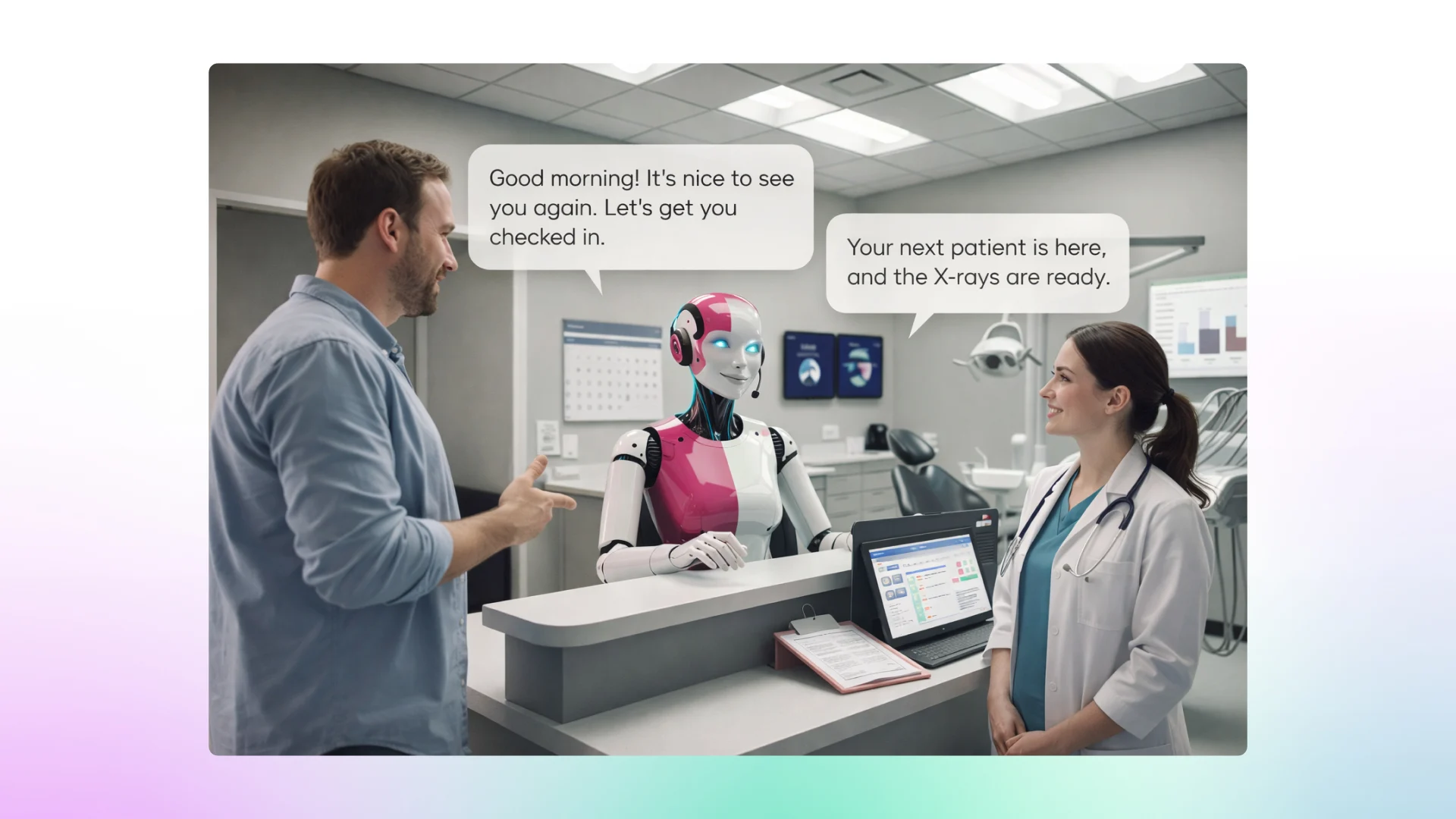
Designed an AI-powered front desk system experience for modern dental clinics.
📝 Note: Due to NDA restrictions, I cannot share Figma or HTML/React prototypes directly. However, I’d happily walk you through the product in a live demo.
At a Glance
Role: Lead UI/UX Product Designer
Platform: Web-based SaaS
Stage: MVP Design & Prototyping
Tools: Figma, Interactive Prototyping, Design Tokens
Timeline: 3 weeks (discovery → prototype)
Primary users: Front desk staff, dentists, practice owners
Secondary users: Patients
Integrations: EMR via NexHealth
Project Overview
Dental clinics depend heavily on their front desk teams to manage appointments, calls, patient intake, follow-ups, and lead conversion. Despite advances in dental software, most clinics still operate with manual, fragmented workflows that increase staff burnout, reduce patient satisfaction, and quietly leak revenue.
This project focused on designing a Dental AI Receptionist MVP—a system that augments front-desk teams with AI to improve rebooking, scheduling efficiency, patient communication, and business visibility, without replacing the human relationship at the center of care.
The challenge was not simply to “add AI,” but to design a trustworthy, ethical, and operationally realistic system that works inside the daily chaos of a dental clinic.
🧠 Context & Problem Space
Dental clinics rely heavily on their front desk teams to manage scheduling, calls, follow-ups, forms, and patient communication.
Despite modern EMRs, most clinics still operate with manual, fragmented workflows that create friction for both staff and patients.
Why This Project Exists
Dental clinics lose revenue and patient trust not because they lack technology, but because front desk work is overloaded and fragmented.
During early discovery, most clinics reported the same issues:
- Missed calls during busy hours
- Manual rebooking and follow-ups
- No visibility into why calls fail
- Patients are dropping off due to delays or anxiety
- Owners are unable to connect daily activity with revenue outcomes
This project focused on one question:
How can AI reduce front desk pressure without replacing human care or trust?
The Problem (Before Design)
This was not a “missed calls” problem.
It was a cognitive load problem.
Front desk staff were expected to:
- Handle walk-ins, calls, forms, and scheduling simultaneously
- Remember patient context across conversations
- Follow up manually while schedules kept changing
As the load increased, follow-ups were delayed or avoided.
Patients booked far out didn’t show.
Owners saw gaps but didn’t know where they came from.
The system needed to reduce cognitive effort precisely when mistakes occur.
Constraints That Shaped the Design
This project had real limits that directly affected decisions:
- Existing EMR systems had to remain the source of truth
- HIPAA-sensitive data could not be over-exposed
- Front desk staff had little time for training
- Clinics needed flexibility without chaotic scheduling
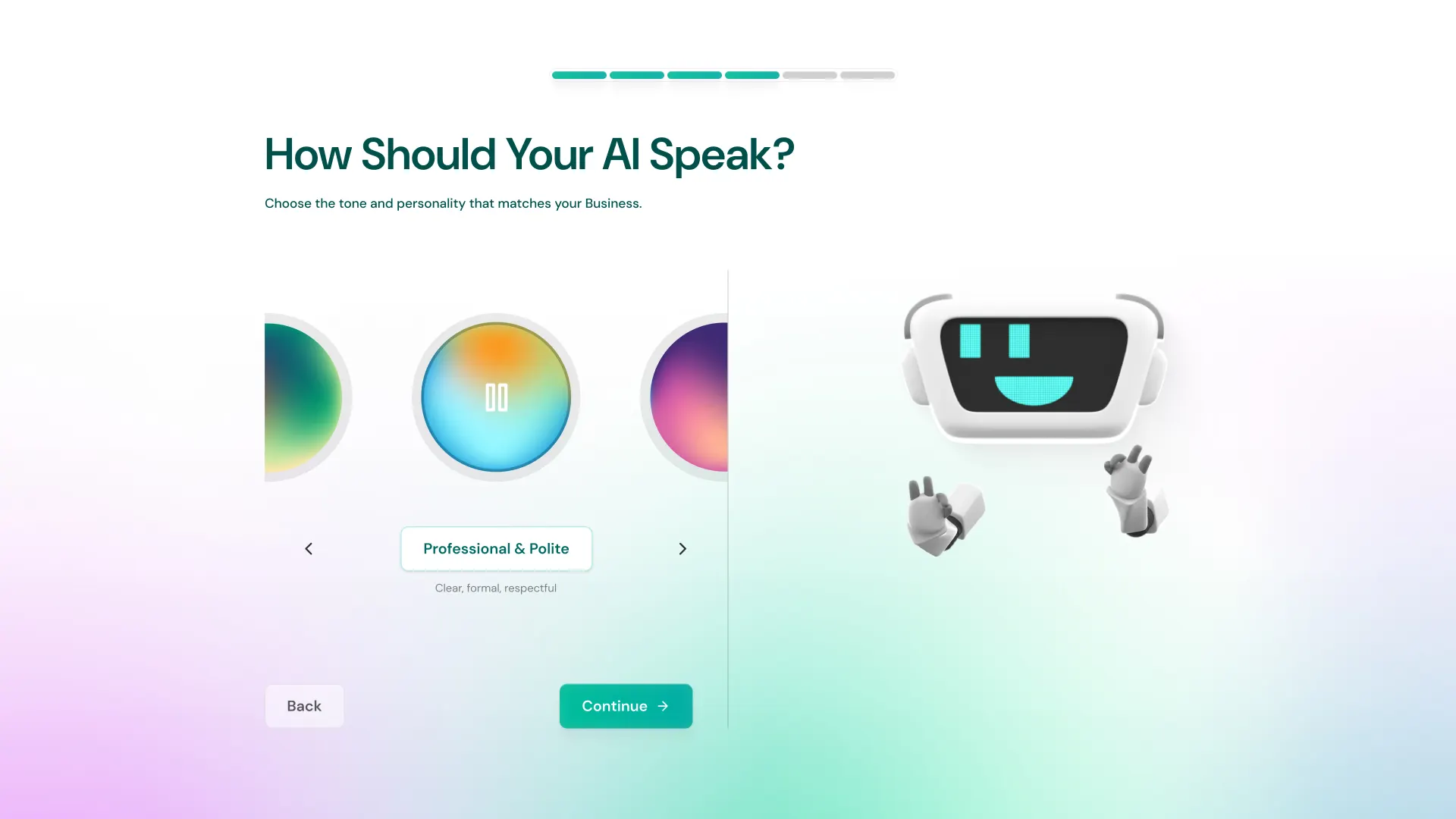
- AI had to feel supportive, not authoritative
Non-goals (by design):
- Fully autonomous scheduling
- Replacing human staff
- Aggressive nudging or dark patterns
- Over-customization that adds complexity
The design goal became clear⇣
Reduce cognitive load at critical moments while preserving empathy, trust, and human judgment.
🎯 Product Vision
Design an AI-powered dental receptionist platform that:
- Reduces manual front desk workload
- Improves patient rebooking and engagement
- Creates operational clarity for owners
- Feels human, ethical, and trustworthy
- Works with existing dental systems (via EMR integrations)
AI would function as a supportive teammate, not an autonomous decision-maker.
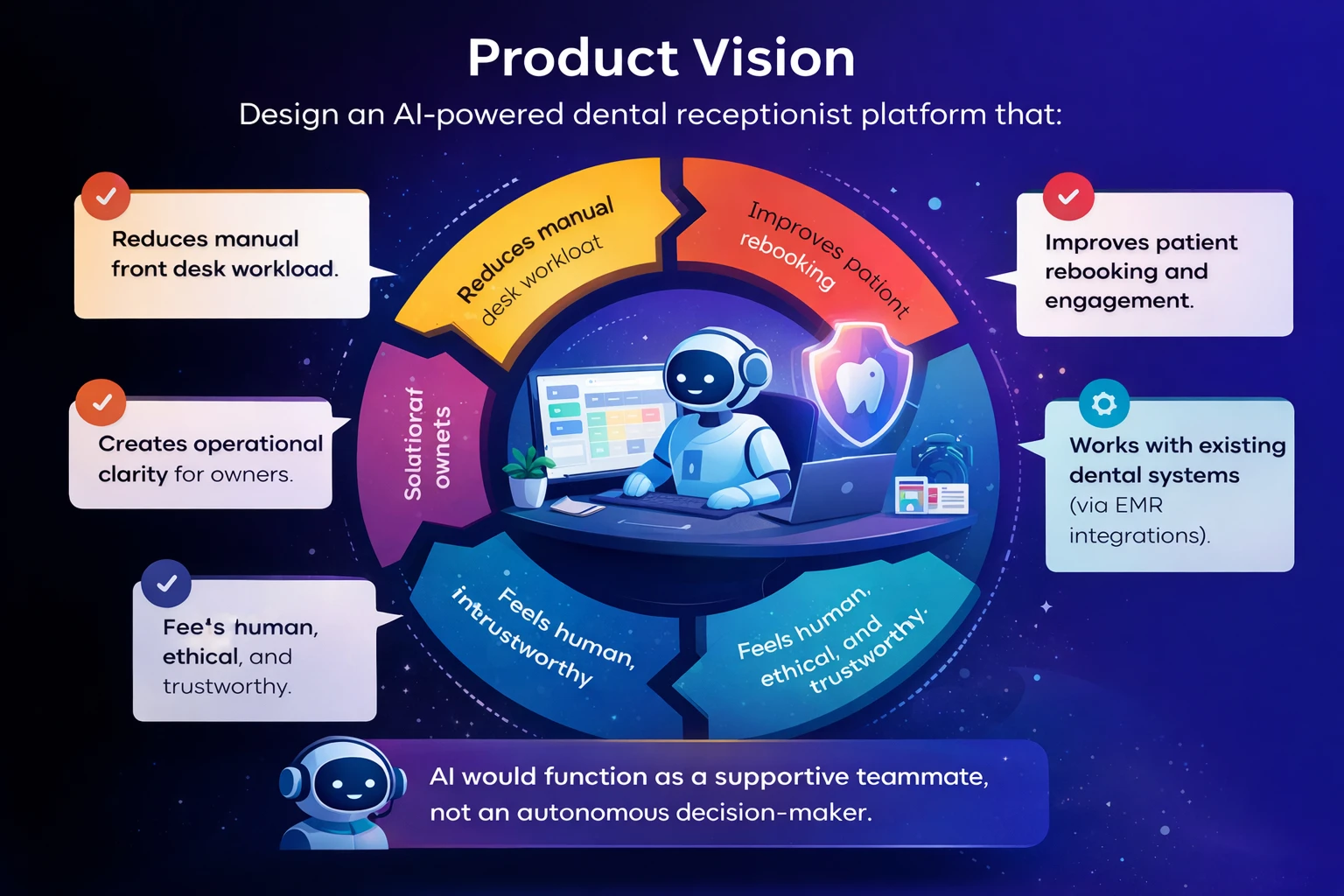
This portfolio case study examines how that vision was translated into a real MVP, rather than focusing solely on the screens that were designed.
My Role
I was responsible for:
- UX strategy and problem framing
- End-to-end product UX
- Information architecture
- Interaction design
- Visual design
- Logo and brand guidelines
- Component-based design system
- Design documentation for engineering handoff
Engineering, product, and stakeholder input shaped constraints, but design decisions were owned and executed by me.
Users & Mental Models
Rather than relying solely on personas, the system was designed around mental models—the questions each user constantly seeks to answer.
Front Desk Staff
“What needs my attention right now?”
They require clarity, prioritization, and prompt action.
Dentists
“Is my time being used effectively?”
They care about schedule quality, not just fullness.
Practice Owners
“Is the business healthy, and what should I do next?”
They want recommendations, not raw metrics.
Patients
“Am I being taken care of, or am I just another booking?”
Their decisions are emotional rather than purely rational.
This mental-model alignment shaped navigation, hierarchy, and AI behavior across the product.
Constraints & Non-Goals
Key Constraints
- Scheduling logic had to preserve operational efficiency
- HIPAA-compliant data handling
- EMR integration boundaries via NexHealth
- Minimal training tolerance for front desk staff
- AI tone required to feel supportive, not authoritative
Explicit Non-Goals
- Replacing front desk staff
- Fully autonomous scheduling without human oversight
- Aggressive behavioral nudging or dark patterns
- Over-customization that increases complexity
System Structure (How the Product Is Organized)
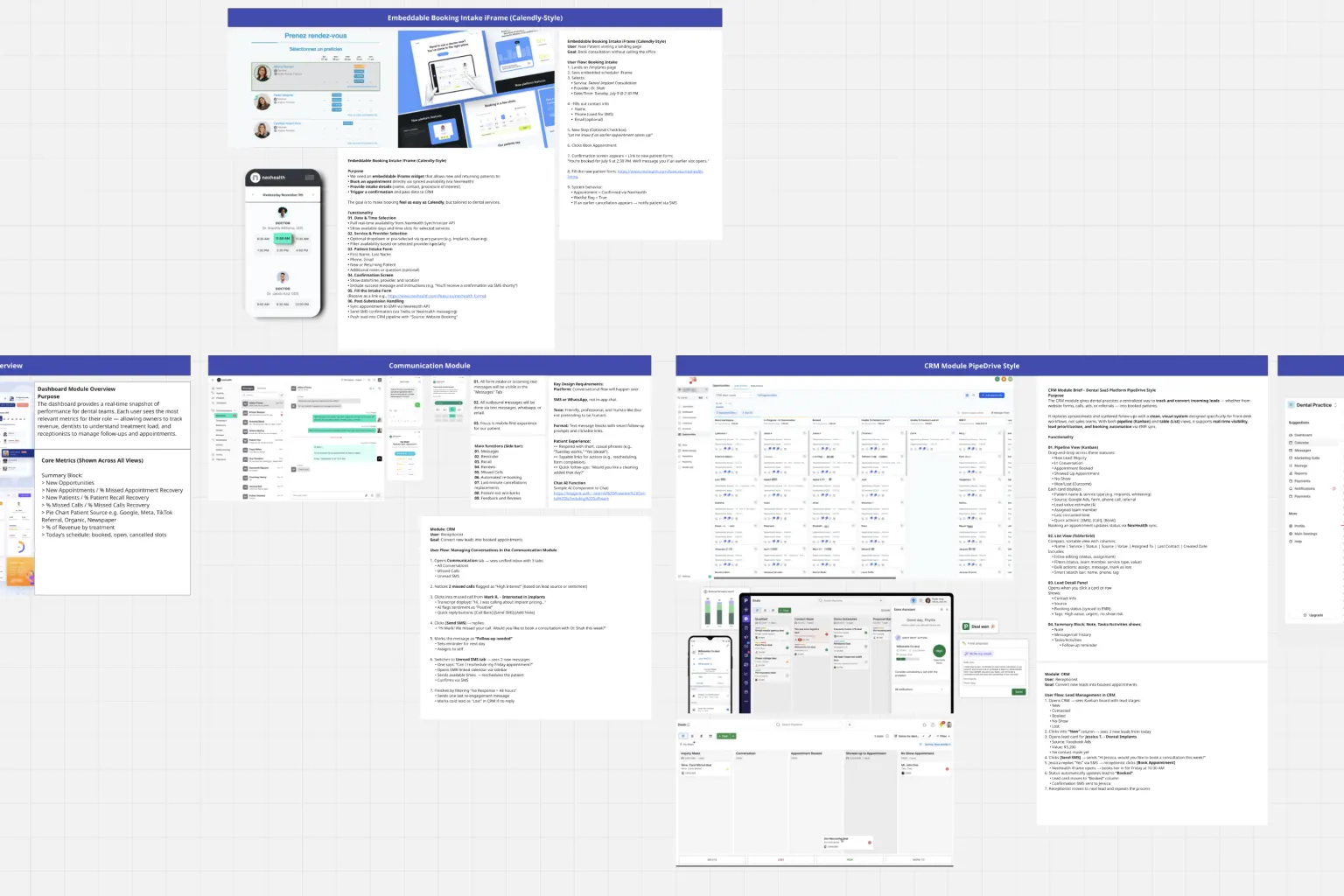
Instead of feature-based navigation, the system was structured around user tasks:
- Front desk staff start with an Inbox
- Dentists start with Schedule clarity
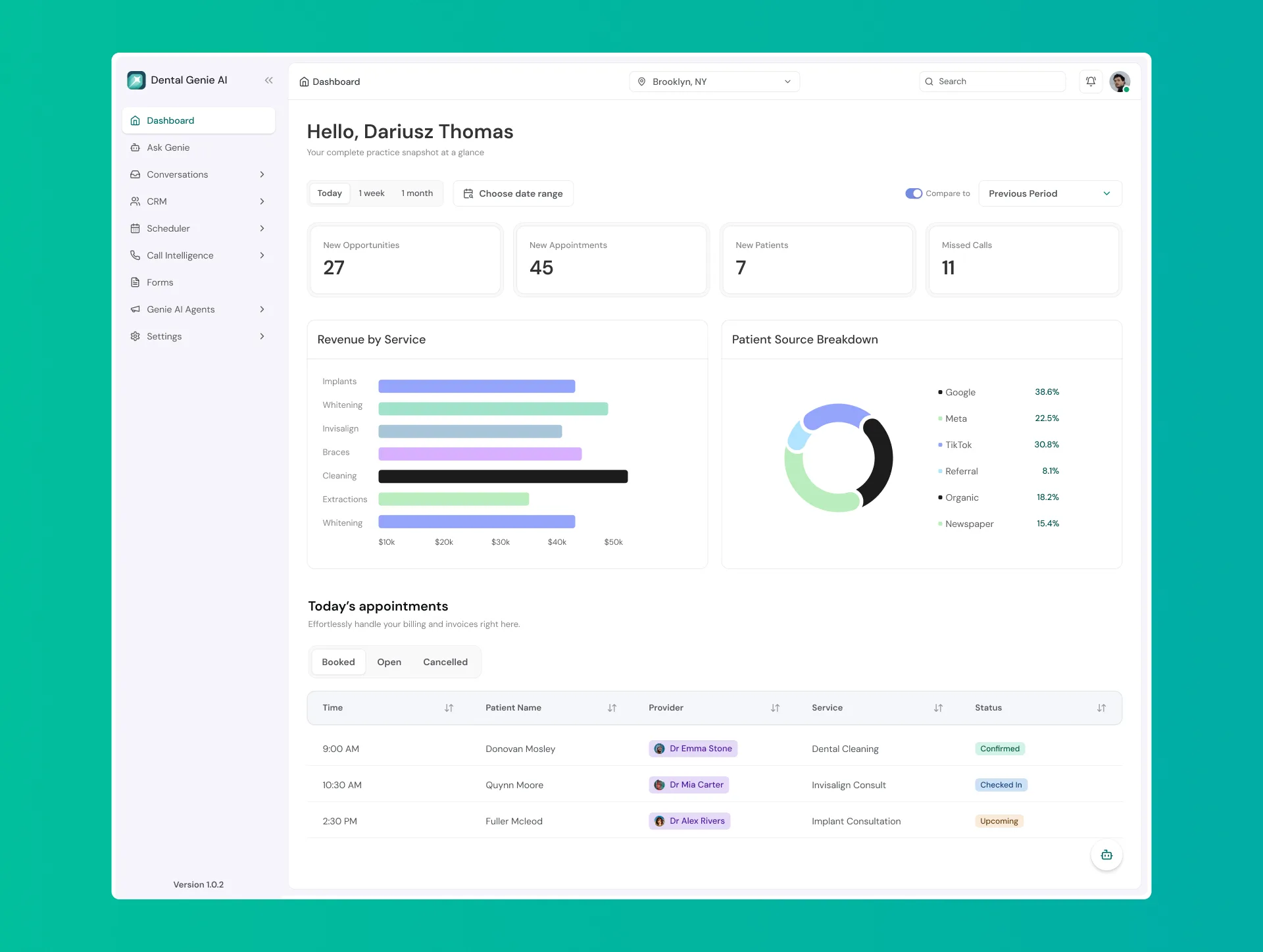
- Owners start with Insights and recommendations
This reduced navigation effort and kept each role focused on what matters most to them.
“Design is not just what it looks like and feels like. Design is how it works.” — Steve Jobs
Research & Curation
Instead of heavy formal research (time-constrained MVP), we used lightweight, high-signal methods:
- Front desk workflow walkthroughs
- Call handling observations
- Missed appointment and recall analysis
- Pattern analysis across dental SaaS tools
- Competitive review of:
- Scheduling tools
- CRMs
- Call analytics platforms
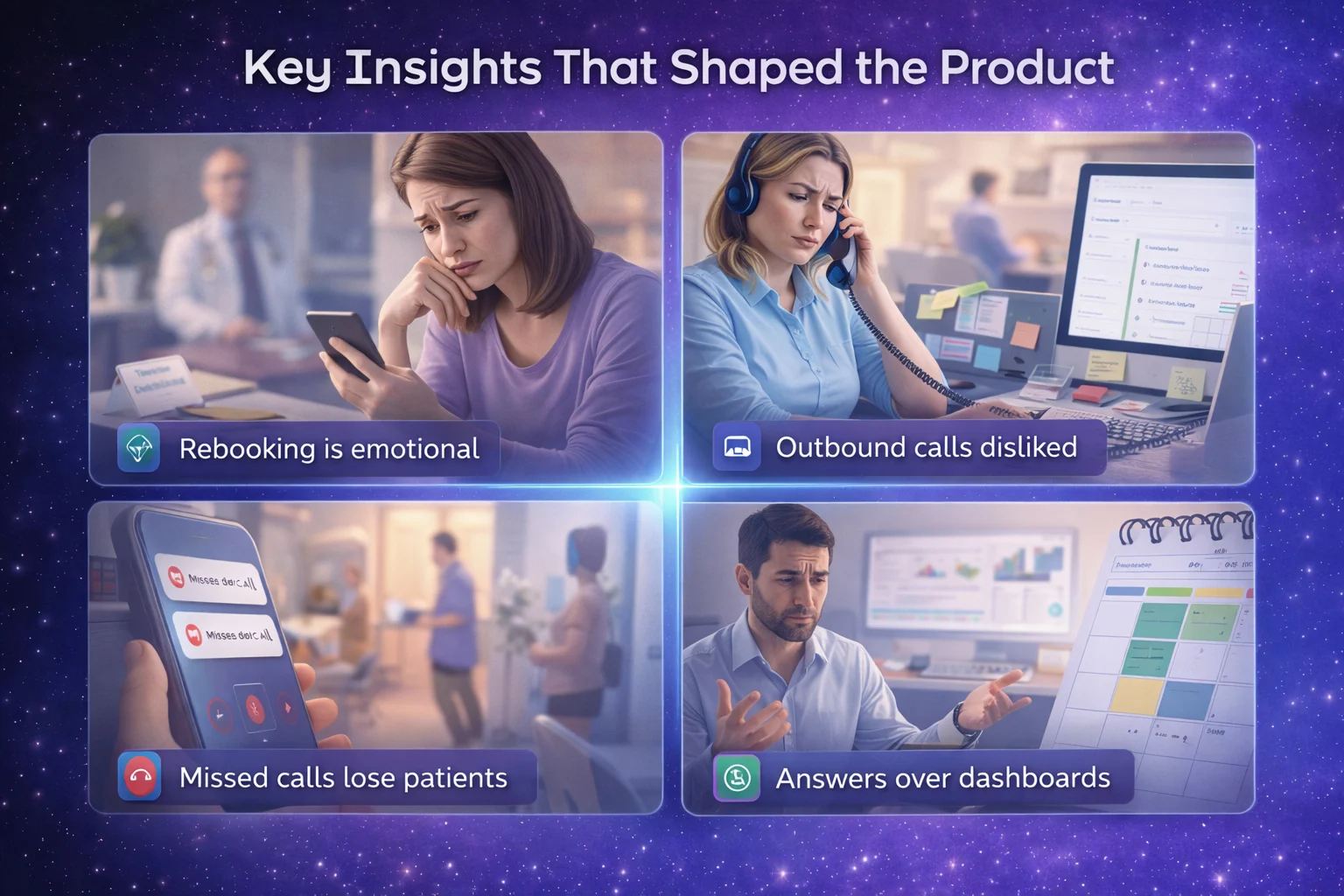
Key Insights That Shaped the Product
- Rebooking is emotional, not logical
Patients delay because of anxiety, inconvenience, or uncertainty—not because of a lack of reminders. - Front desk teams hate outbound calls
Not because they’re lazy—but because they’re time-consuming, repetitive, and uncomfortable. - Missed calls = lost patients
Clinics rarely call back fast enough. - Owners want answers, not dashboards
“What should I do?” matters more than raw metrics. - Scheduling must stay intentionally imperfect
Maintaining a ~5% open schedule is healthier than 100% utilization.
MVP Architecture & System Design
The platform was structured around tasks rather than features, resulting in six interconnected modules.
Navigation logic prioritized:
- Inbox-first workflows for receptionists
- Insight-first dashboards for owners
- Schedule-first views for dentists
This reduced cognitive load by allowing each role to focus on what matters most, without navigating unnecessary modules.