
The Art of Noticing didn’t give me a framework or a checklist. What it gave me was something far more useful as an AI product designer: a different way of paying attention.
Some books end when you close the last page. Others follow you around. The Art of Noticing was firmly in the second category for me.
How The Art of Noticing Changed My AI SaaS Design?
After finishing it in 2022, I (Prince Pal) didn’t feel the usual urge to summarize it, highlight a few quotes, and move on.
Instead, I felt curious—about the author, about where these ideas came from, and about how this way of thinking could extend beyond writing and into the work I do every day as an AI product designer.
That curiosity led me to Rob Walker’s website, and eventually to a video of him speaking—calmly, thoughtfully, without trying to impress anyone.
And that’s where something clicked for me.
Why This Book Hit Me Differently as an AI Product Designer
I design AI-powered SaaS products. My day-to-day work revolves around:
- Interfaces that guide decisions
- Systems that surface insights
- AI models that predict, recommend, and respond
On paper, this is about logic, flows, and systems.
In reality, it’s about attention.
Who gets it?
When?
And at what cost?
The Art of Noticing reframed these questions in a way no UX playbook ever has.
Noticing: A Better Way to Design AI SaaS UX
Most AI SaaS tools today are built to act intelligently.
Very few are built to notice intelligently.
Rob’s book helped me articulate something I had been feeling for a long time:
AI products don’t just need better algorithms—they need better attention design.
Here’s how the book directly connects to designing a noticing-driven AI SaaS product.

1. From “Smart Features” to Meaningful Moments
AI interfaces often suffer from over-eagerness.
They suggest too much.
Interrupt too often.
Explain too little.
Rob’s emphasis on noticing what’s overlooked made me rethink feature design. Instead of asking:
“What else can AI do here?”
I started asking:
“What is the user quietly experiencing in this moment?”
A noticing SaaS product doesn’t flood users with intelligence.
It waits.
It observes.
It intervenes only when it truly adds value.
That philosophy aligns perfectly with Rob’s core idea: attention is precious—treat it that way.
2. Designing for the Unspoken, Not Just the Measurable
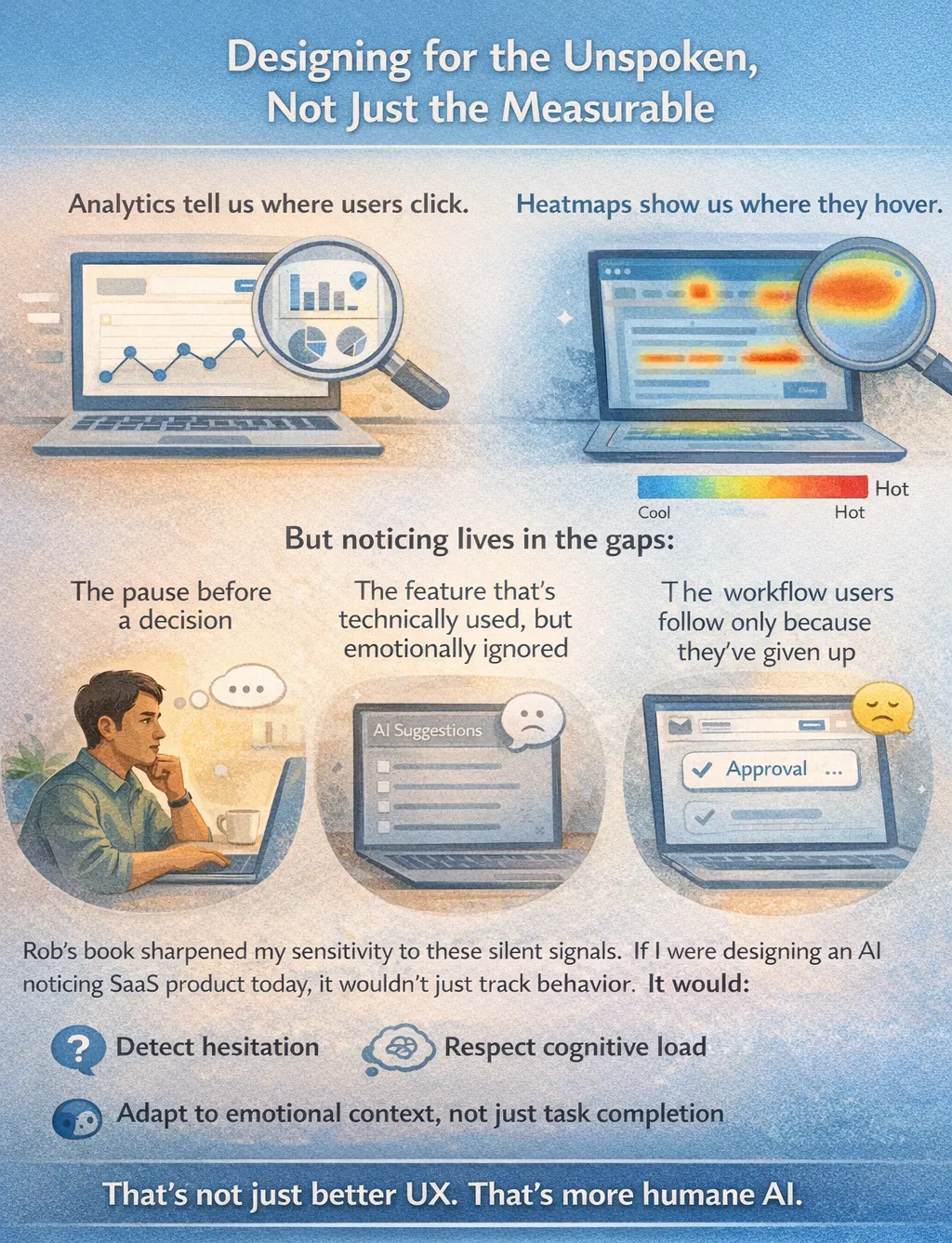
Analytics tell us where users click.
Heatmaps show us where they hover.
But noticing lives in the gaps:
- The pause before a decision
- The feature that’s technically used, but emotionally ignored
- The workflow users follow only because they’ve given up
Rob’s book sharpened my sensitivity to these silent signals.
If I were designing an AI noticing SaaS product today, it wouldn’t just track behavior. It would:
- Detect hesitation
- Respect cognitive load
- Adapt to emotional context, not just task completion
That’s not just better UX.
That’s more humane AI.
3. Quiet Interfaces Are a Feature, Not a Flaw
One of the strongest ideas in The Art of Noticing is that not everything needs to be shared, surfaced, or acted upon.
This is radically important for AI design.
Most AI tools are built around visibility:
- Dashboards
- Alerts
- Rankings
- Trends
But noticing teaches us that value often lies in what stays in the background.
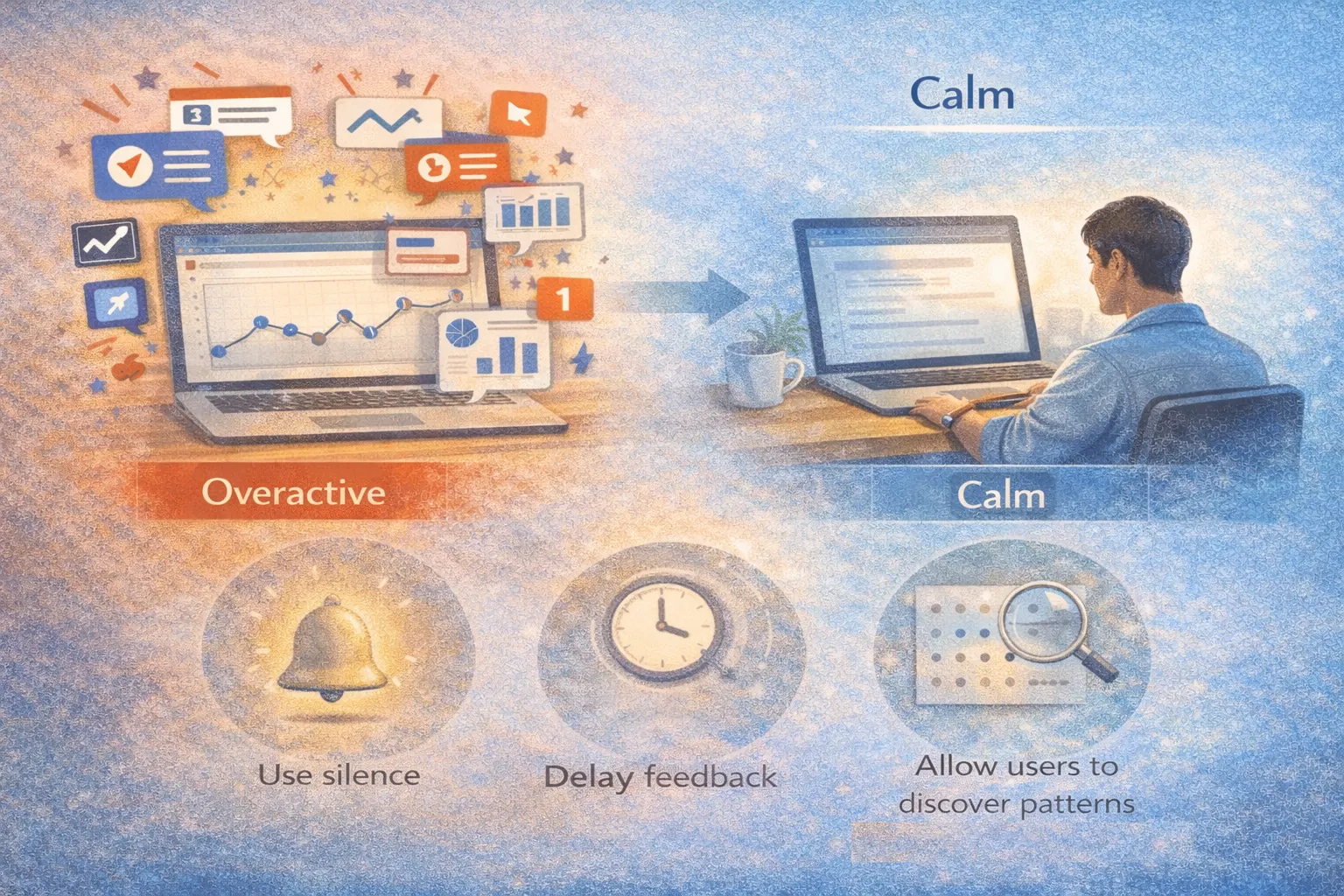
A noticing-driven SaaS interface would:
- Use silence intentionally
- Delay feedback when reflection matters more than reaction
- Let users discover patterns instead of forcing conclusions
Rob’s thinking validated something I deeply believe as a designer:
Restraint is a design skill.
4. Training the Designer Before Training the Model
One unexpected impact of the book was personal.
Before designing AI systems that “notice,” I realized I had to practice noticing myself.
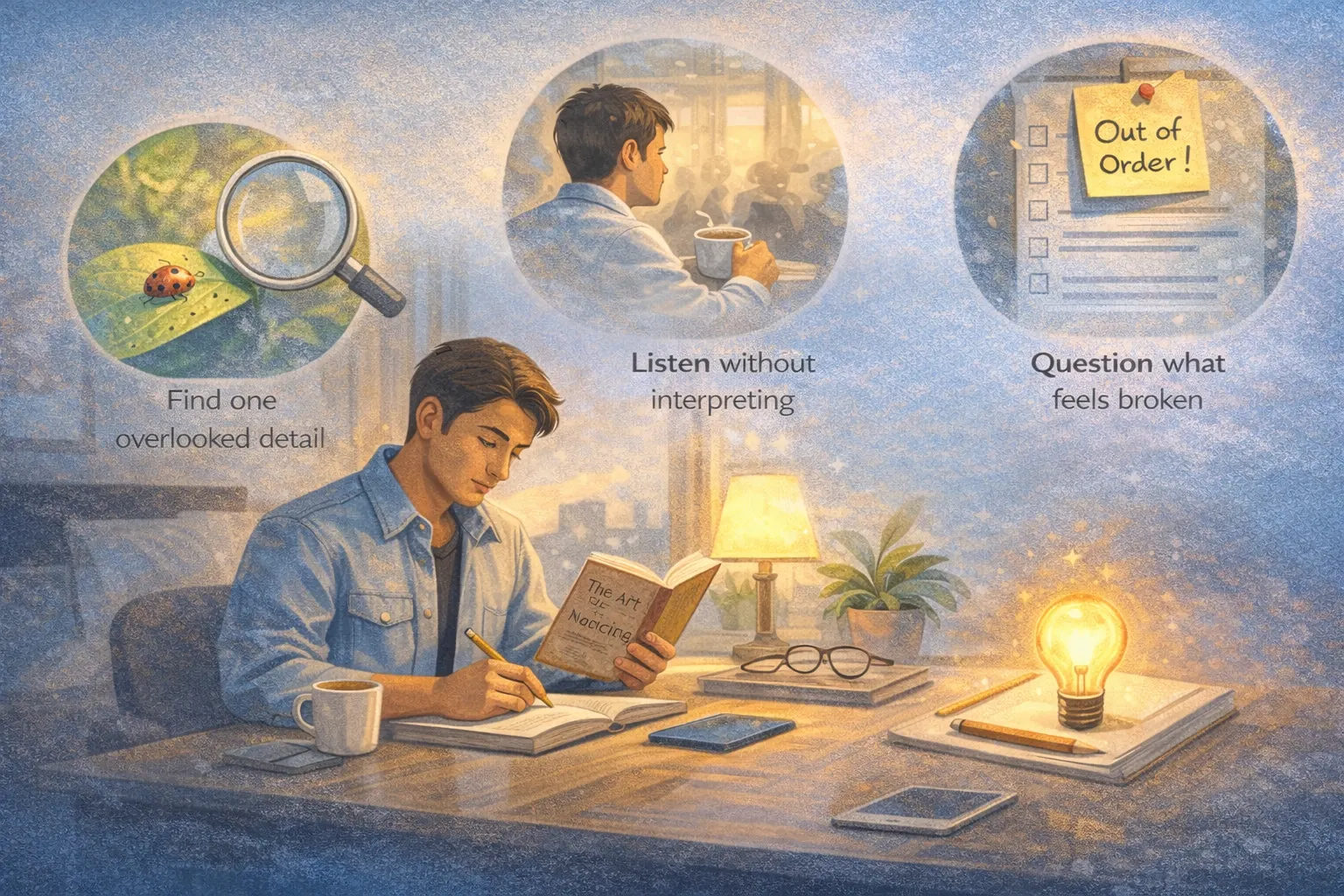
Rob’s small exercises—looking for one overlooked thing, listening without interpreting, questioning what feels broken—felt like mental design drills. They trained my intuition in ways no framework ever could.
As an AI product designer, this matters deeply.
Because the quality of an AI interface is limited by the quality of attention behind it.
5. Noticing as an Ethical Design Foundation
There’s an ethical layer here that feels especially relevant to AI.
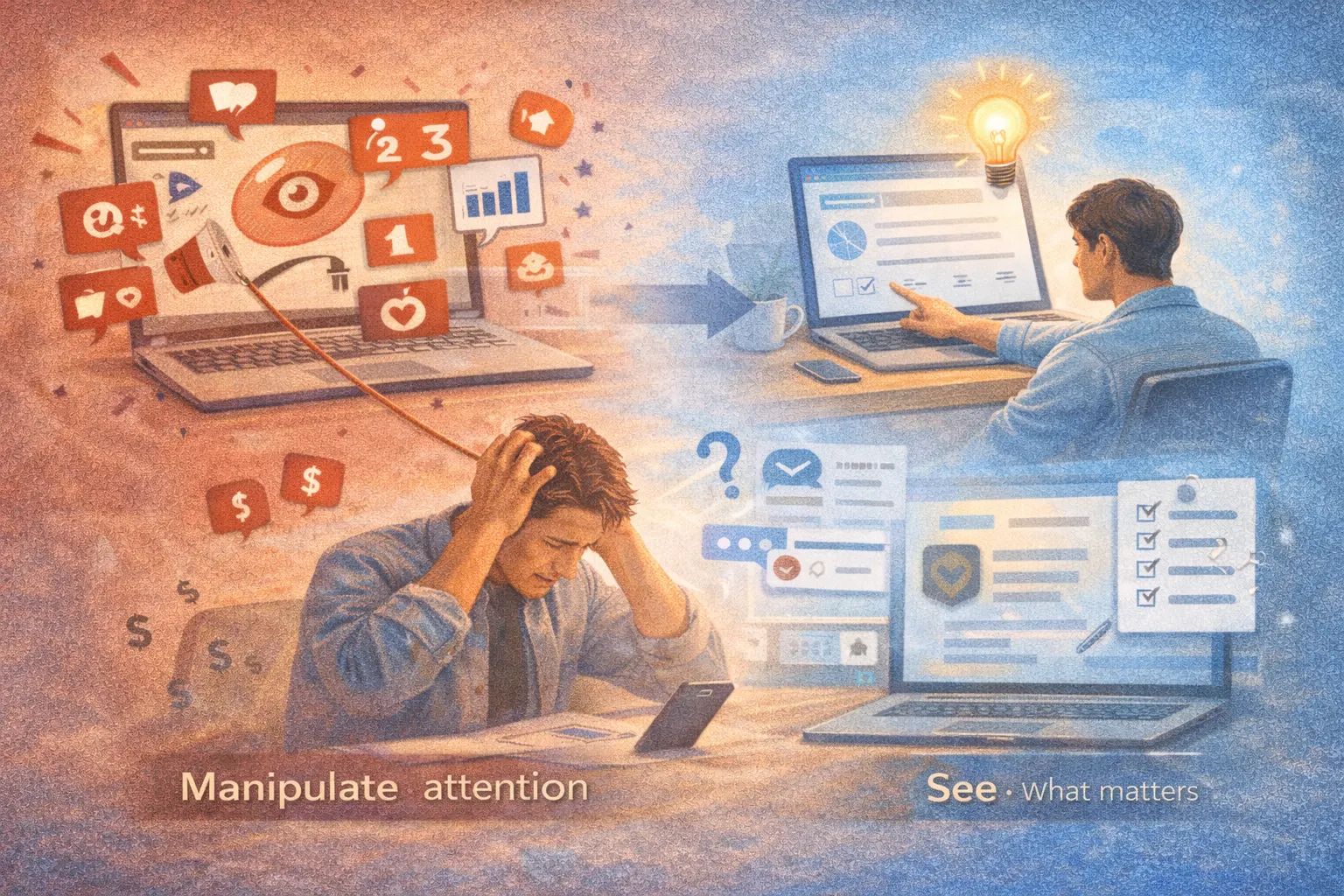
Rob repeatedly pushes back against letting others—or systems—control our attention. That idea translates directly into responsible AI design.
A noticing SaaS product should not:
- Manipulate attention
- Exploit anxiety
- Optimize engagement at the cost of clarity
Instead, it should help users:
- See what matters
- Understand why it matters
- Decide what to do next—consciously
That’s not just good UX.
That’s good citizenship in an AI-driven world.
6. Noticing as a Product Strategy, Not Just a UX Technique
One idea that becomes clearer after watching Rob Walker speak—especially in long-form talks like the video you discovered—is that noticing isn’t a tactic. It’s a strategy.
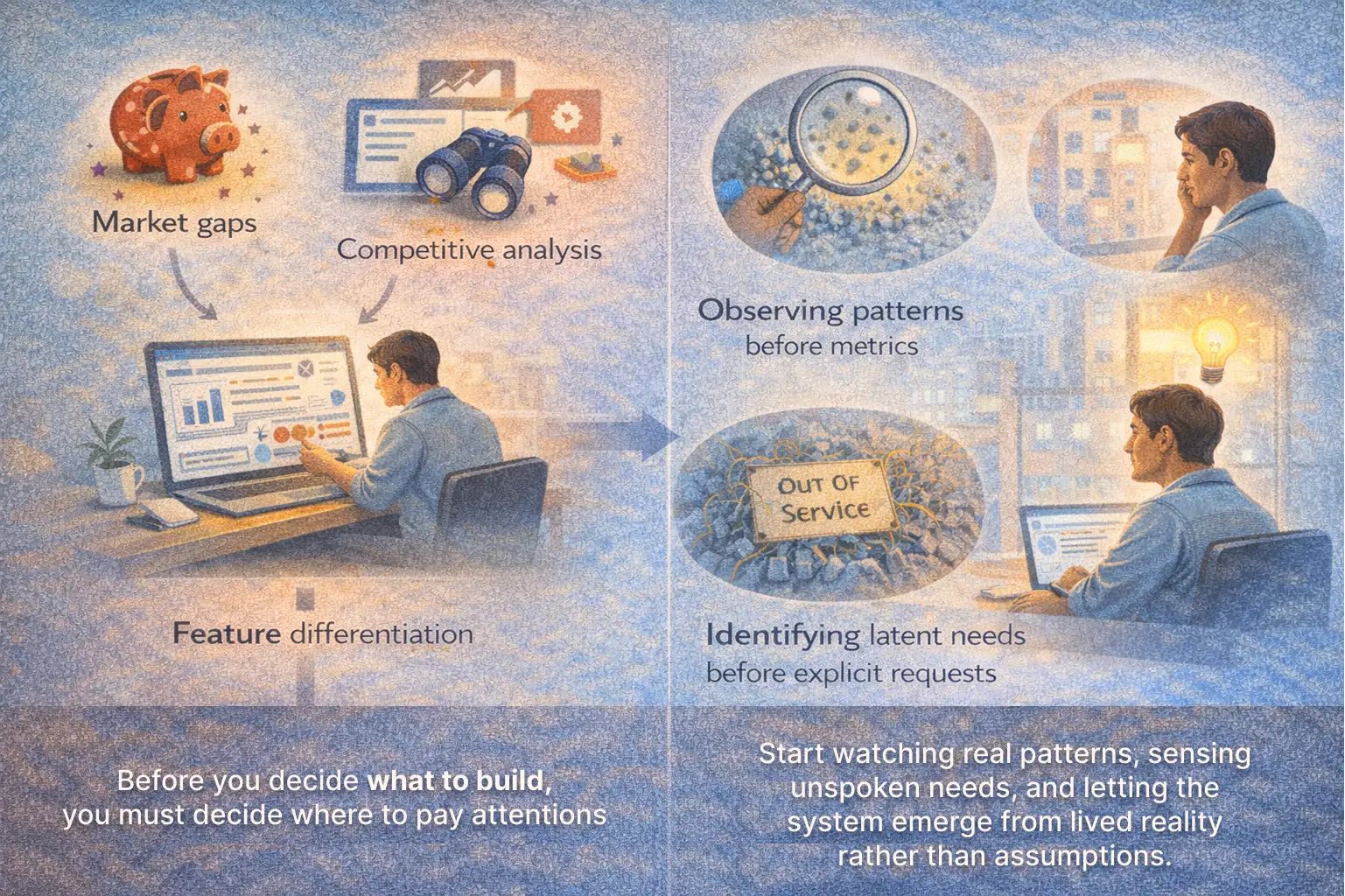
In AI SaaS, strategy often starts with:
- Market gaps
- Competitive analysis
- Feature differentiation
But The Art of Noticing suggests something more fundamental:
Before you decide what to build, you must decide what to pay attention to.
For a noticing-driven AI product, this means:
- Observing patterns before metrics
- Identifying latent needs before explicit requests
- Designing systems that emerge from reality, not assumptions
This reframes AI product discovery itself as an act of noticing.

7. The “Museum Diet” and Cognitive Load in AI Interfaces
Rob talks about intentionally limiting attention—like looking only at three things in a museum. This idea translates powerfully into AI interface design.
Most AI dashboards suffer from attention obesity:
- Too many charts
- Too many insights
- Too many “smart” suggestions
A noticing SaaS product could adopt a Museum Diet UX:
- Show fewer insights, but make them meaningful
- Allow users to “commit” to one signal at a time
- Encourage depth over breadth
This approach directly counters the anxiety-driven design patterns common in AI tools today.
8. Noticing as a Counterweight to Automation Bias
One subtle but critical theme in Rob’s work is agency.
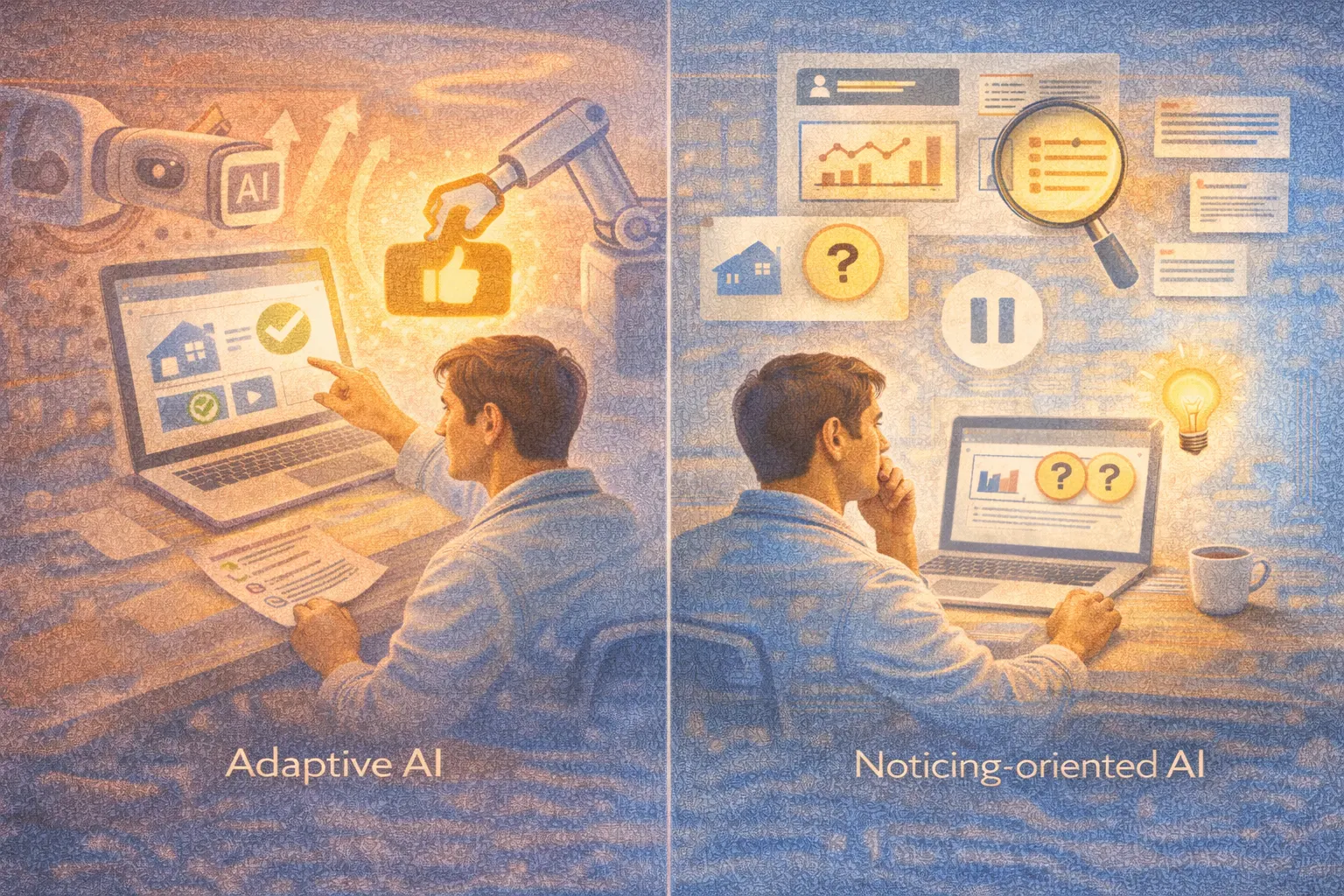
Noticing requires participation. Automation removes it.
In AI SaaS, this tension shows up as:
- Blind trust in AI outputs
- Users following recommendations without reflection
- Decision-making is being outsourced too early
A noticing-oriented AI interface would:
- Encourage users to pause before accepting
- Show why a suggestion surfaced
- Invite interpretation, not obedience
This makes the AI a thinking partner, not an authority.
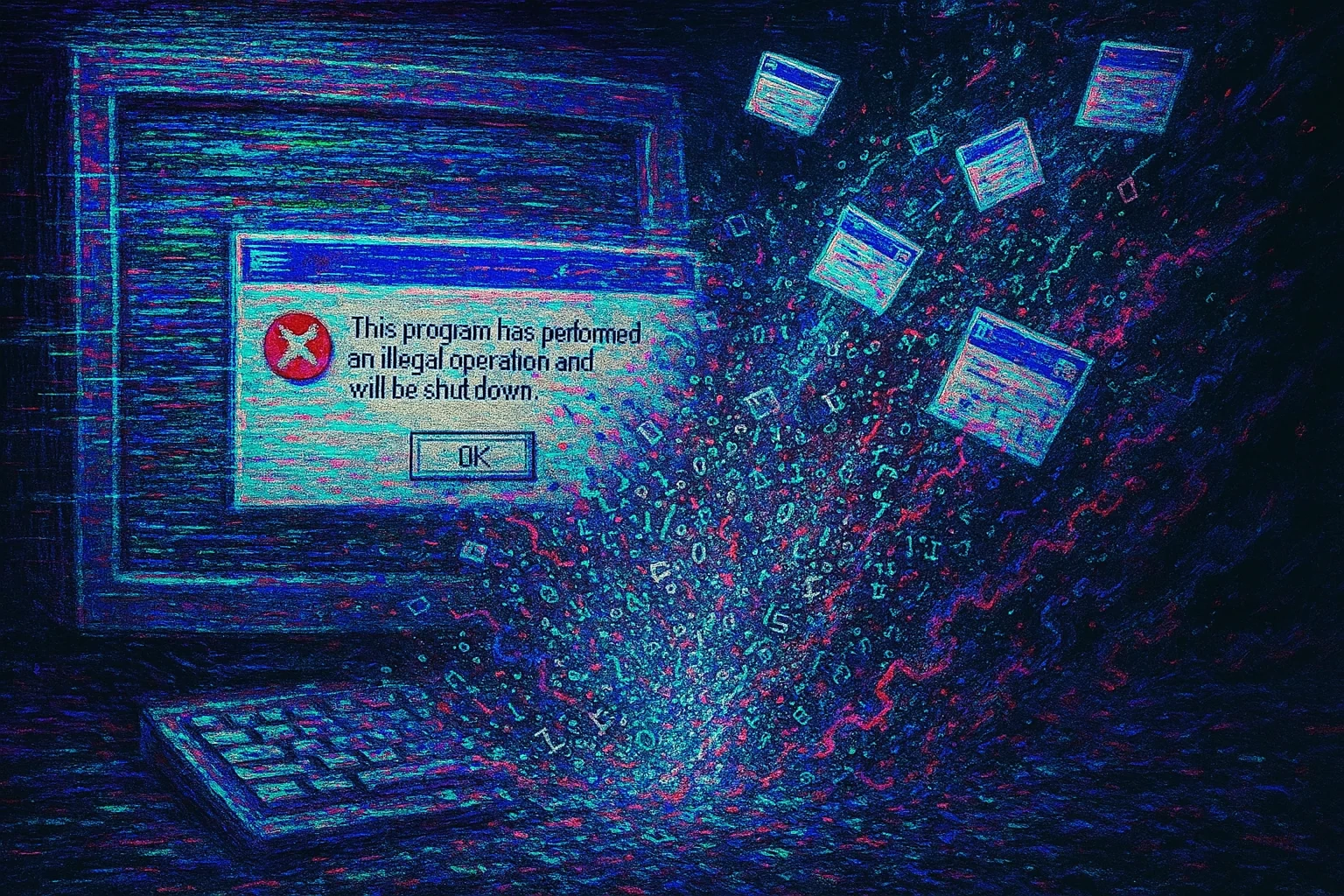
9. “If I Think It’s Broken, It’s Broken” → User-Led AI Design
Rob’s defense of complaining is especially relevant to SaaS design.
Most AI products define “problems” through:
- Funnel drop-offs
- Error rates
- Support tickets
But noticing teaches something else:
Friction felt by one attentive user is still valid and it’s apply of all.
In a noticing SaaS product:
- A single user’s discomfort can trigger design exploration
- Edge cases become innovation seeds
- “This feels wrong” is treated as a signal, not noise
This mindset helps AI designers move beyond averages and design for lived experience.
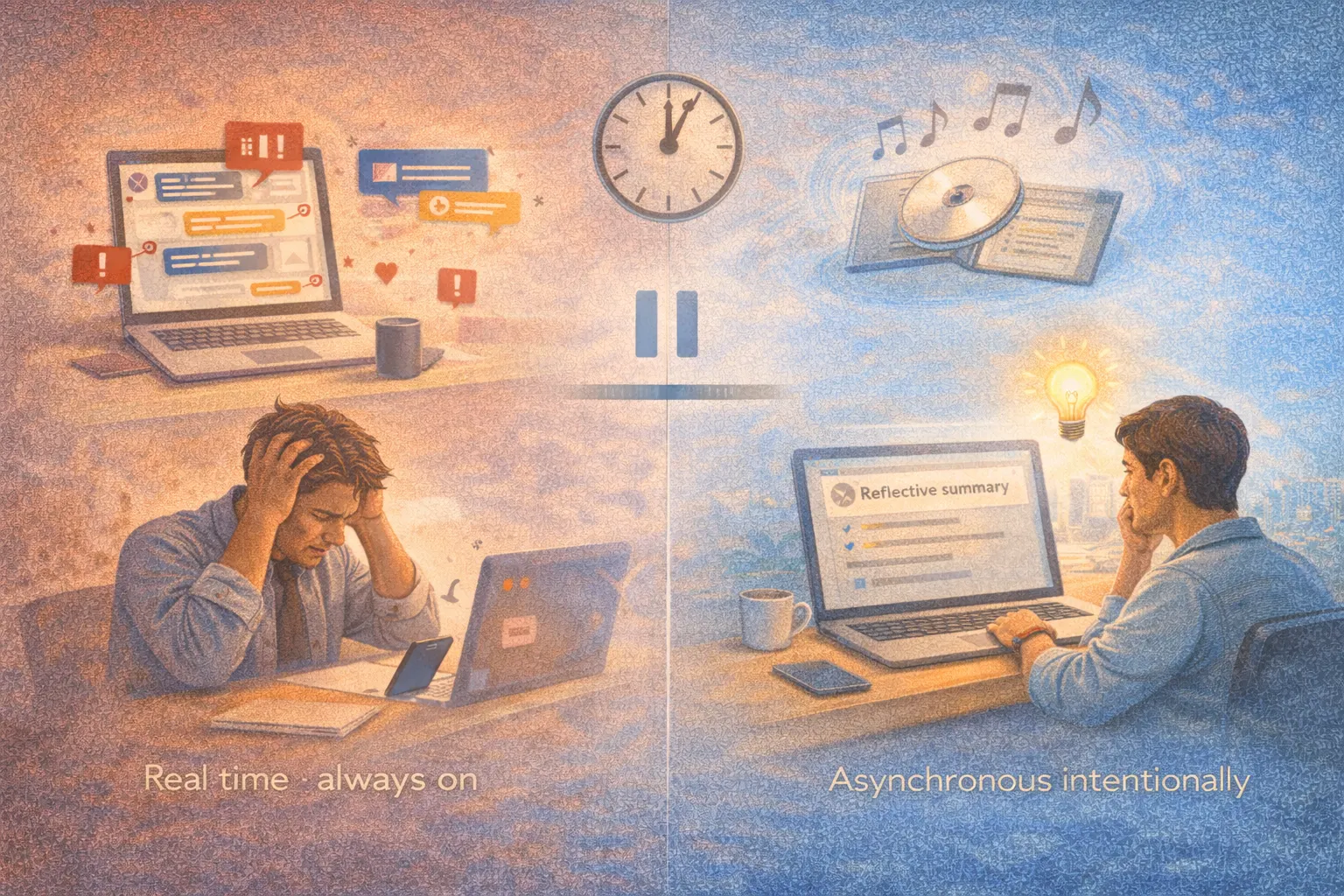
10. Quiet Time, 4’33”, and Asynchronous AI
Rob’s reference to John Cage’s 4’33”—intentional silence—has a surprisingly strong parallel in AI UX.
Most AI systems are:
- Real-time
- Always-on
- Constantly responding
But some of the most meaningful insights happen after interaction.
A noticing SaaS product could:
- Delay responses intentionally
- Offer reflective summaries instead of instant feedback
- Encourage asynchronous thinking instead of real-time pressure
Silence becomes part of the interface.
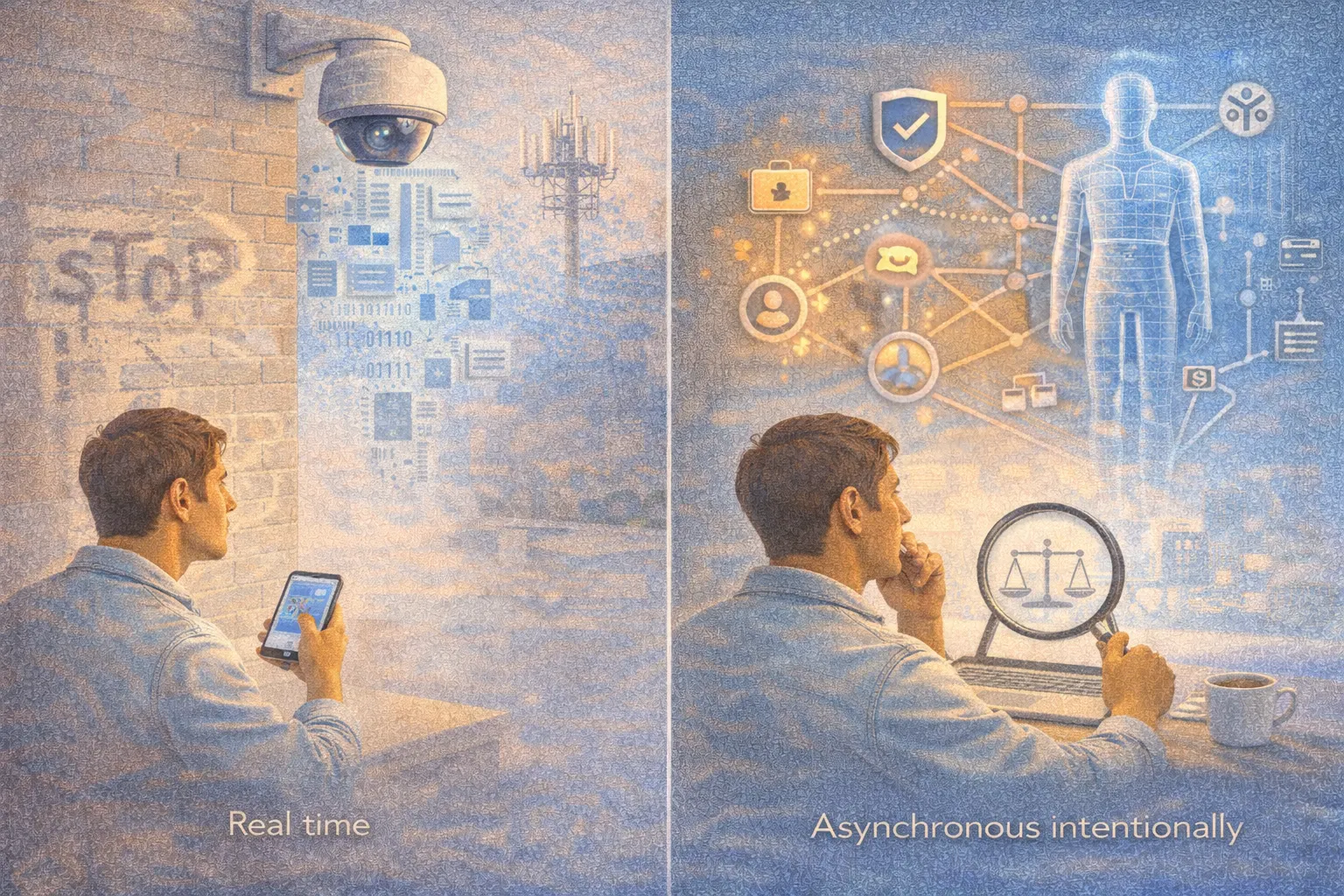
11. Noticing What the System Doesn’t Want You to See
One of Rob’s most powerful exercises is noticing things no one designed you to see—like security cameras, infrastructure, or erased graffiti.
This is deeply relevant to AI product ethics.
A noticing AI product should help users see:
- What data is being collected quietly
- What assumptions does the model make
- What trade-offs are hidden behind “smart” outputs
Designing transparency is not just about disclosures—it’s about making the invisible visible.
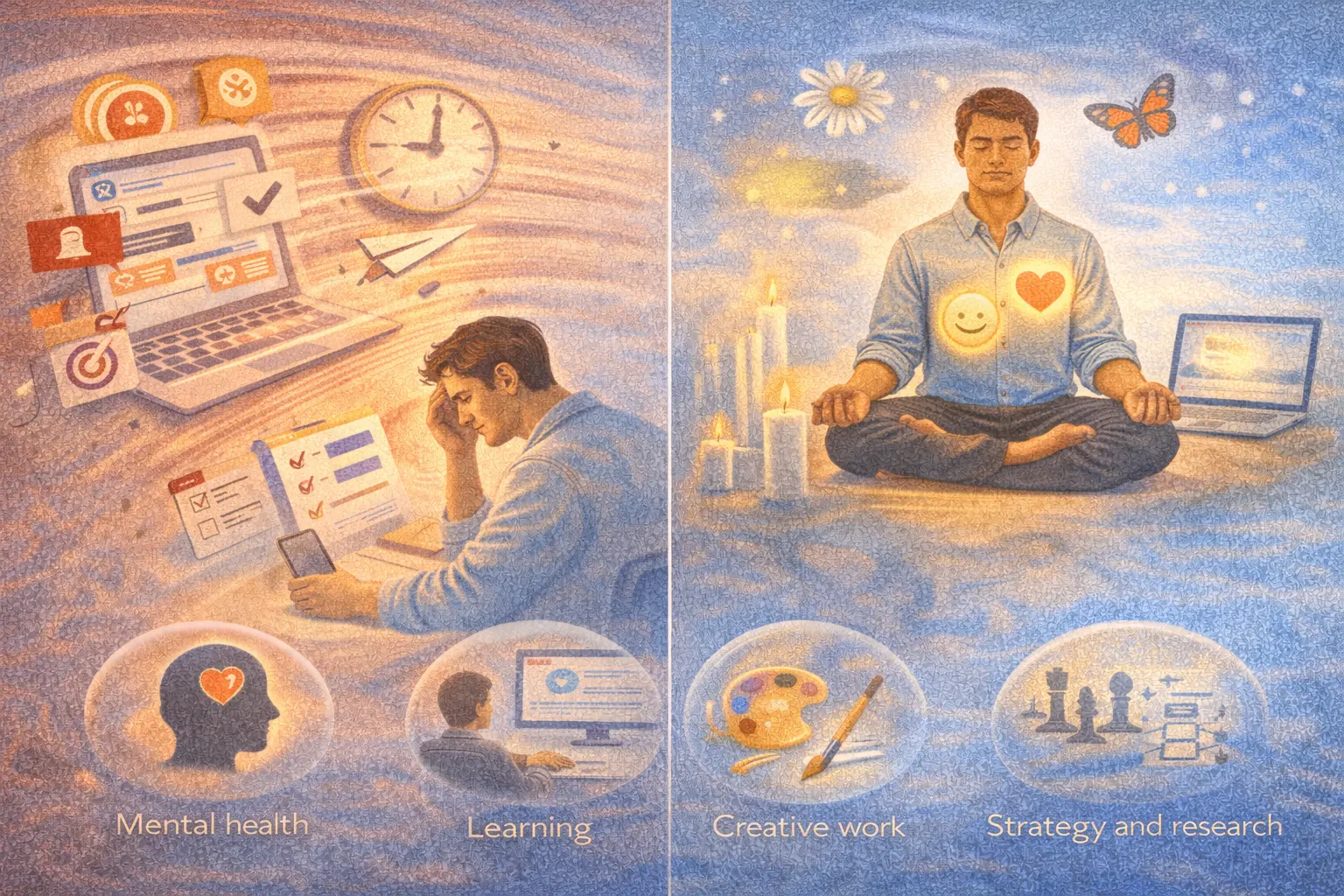
12. Designing AI for “Nows,” Not Just Outcomes
Rob talks about efficiency, accelerating time, and how life becomes a blur when everything is optimized.
Many AI SaaS tools make this worse:
- Faster workflows
- Shorter cycles
- Continuous optimization
A noticing-driven AI product might instead:
- Highlight moments, not just milestones
- Celebrate awareness over completion
- Design for presence, not just productivity
This is especially powerful for AI tools in:
- Mental health
- Learning
- Creative work
- Strategy and research
Bonus Tip
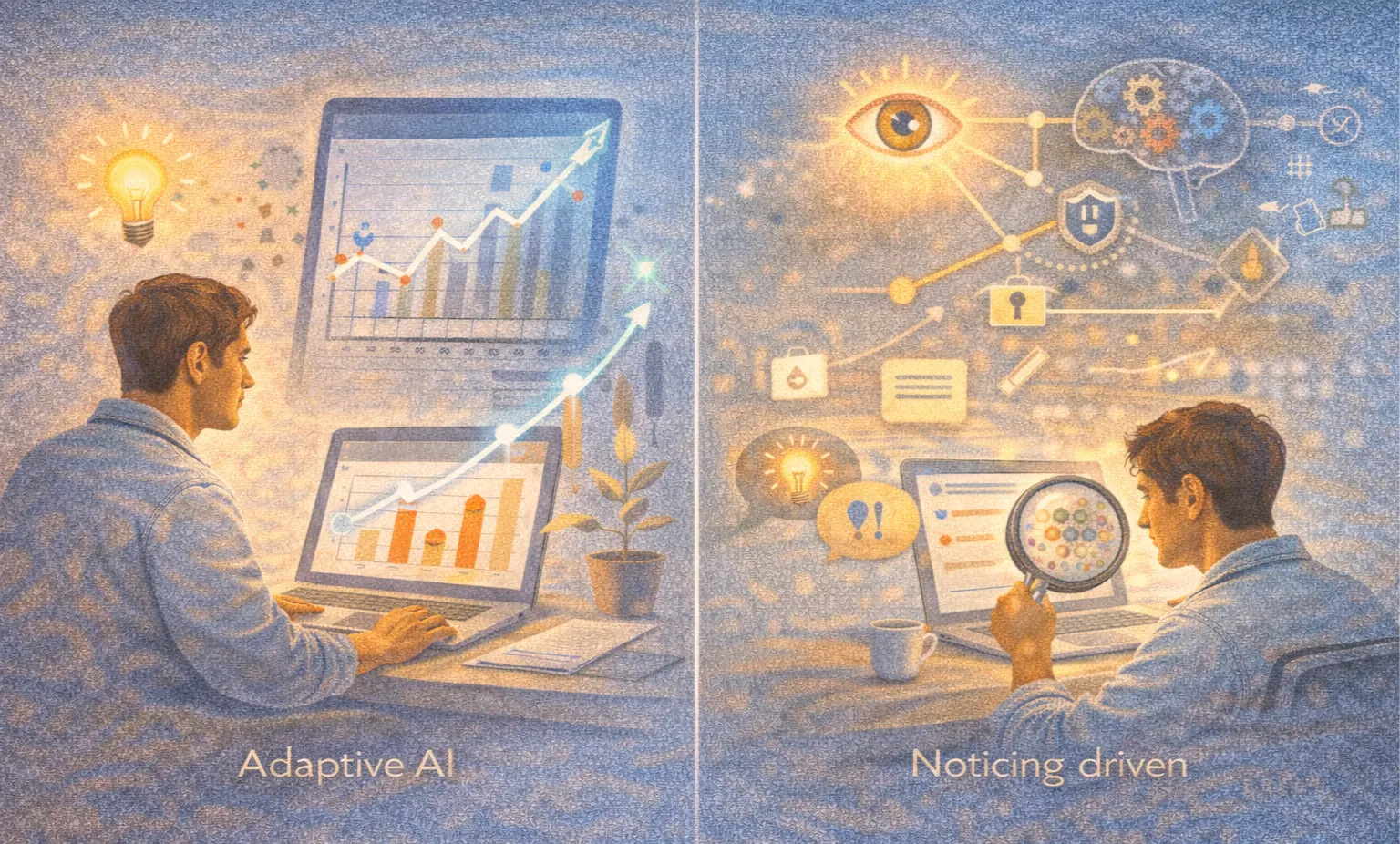
Training Attention Is a Competitive Advantage
One final point that deserves emphasis:
Noticing is a learnable skill.
This opens an entirely new product category.
A noticing SaaS product doesn’t just do things for users.
It helps users see better over time.
This could mean:
- Adaptive interfaces that evolve with user awareness
- AI that reflects patterns the user didn’t realize they had
- Products that make users more perceptive, not more dependent
That’s a rare and valuable promise in the AI space.
Why This Book Matters to Me, Specifically
Reading The Art of Noticing led me to Rob Walker’s work.
Watching him speak helped me internalize the philosophy.
Designing AI products gave those ideas a place to live.
As Prince Pal, an AI product designer, this book didn’t just inspire me—it recalibrated my design lens.
It reminded me that:
- Interfaces are not neutral
- Attention is not infinite
- And the things we choose to notice shape the systems we build
If we want to design AI SaaS products that feel calm, trustworthy, and genuinely helpful, we need to design them the way Rob Walker approaches the world:
With curiosity.
With restraint.
With care.
Because in the end, the best AI products won’t be the loudest ones.
They’ll be the ones that notice what truly matters—
and help users do the same.